Sunday, October 17, 2010

Animal Welfare, Q8

Anyone living in or visiting Kuwait cannot help but notice the large number of cats roaming the streets. I was surprised at first because back in India, both cats and dogs are found roaming the streets but the number of stray dogs are much more. Here, we hardly find any dogs. But read somewhere that there are desert dogs on the outskirts. I have not yet seen a single dog. Many of the cats that are seen roaming are former house pets which are abandoned either because the owners were leaving the country and could not take them along, or because the owners no longer wanted to keep them.

In order to deal with the problem of stray animals,concerned citizens and expatriates have worked together to establish not one, but two animal shelters. Protecting Animal Welfare Society(PAWS), managed by Margaret McLuskey, is located in Wafra and was started by a group of expatriates who were concerned about the state of animal welfare in Kuwait. Animal Friends League(AFL), established and run by Aisha Al-Homaidi, is located in the centre of Wafra on a large plot of land that was donated to the cause. Both shelters are privately run and do not receive funding from the State, but rather rely on fundraising activities and donations from individuals.

PAWS was formed in 2003 and has rescued and re-homed over 1000 animals since then.Described as a mini-UN, it has board members from Kuwait,Germany,Netherlands,UK,South Africa,USA,Syria, Egypt and Canada.It has almost 350 members, who provide support through donations,time and useful items.

AFL was initially a group of volunteers temporarily housing animals in their own homes. It expanded to include a large facility with five full time paid staff members and countless volunteers. The shelter not only rescues and re-homes animals in Kuwait,but also relocates dogs and cats to various countries in the world.All adopted animals are vaccinated and neutered before leaving the shelter.Donation to the shelter is not enough to cover costs,AFL also relies on fundraising activities,including holding paintball tournaments and quiz nights.

With both animal shelters working ceaselessly to improve the lives of all stray animals in Kuwait through providing care to them and educating the general public, the quality of life for many stray animals is bound to improve.Each individual can help the cause either by donating time or supplies, or just simply being a friend to an animal.

AJMAL: A tradition that lingers

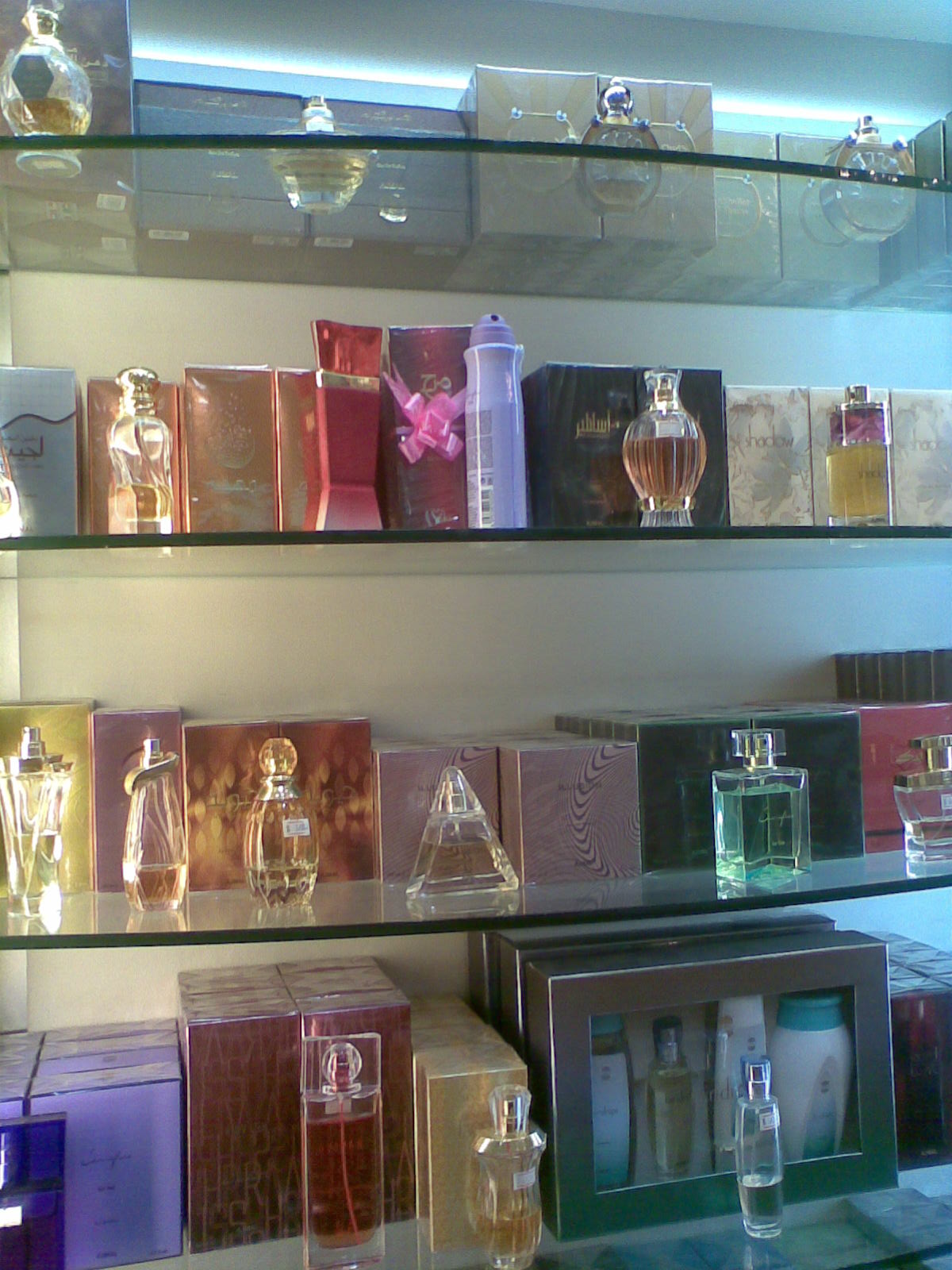
There are some things that add spice to life. Perfumes are one of them. They are associated with elegance, culture and wellbeing. It is one of those products that may influence our emotions. Countless books have been written on the beneficial effects of perfumes on the body and mind. Medical research has established that the odors we smell have a significant impact on the way we feel. Perfumes from the Gulf region are unique in their appeal and originality, enjoying a certain “essence” which is unique to the region. They are an exotic and rich combination of incense and oils but without the use of an alcohol base that is normally used in Western perfumes. They have woody, oriental, flowery, fruity bases with sensual notes of musk, ambergris, cedar, spices, frankincense, citrus, sandal and cashmere wood. A small drop of Arabic perfume is enough to make aroma last for about 10 hours.

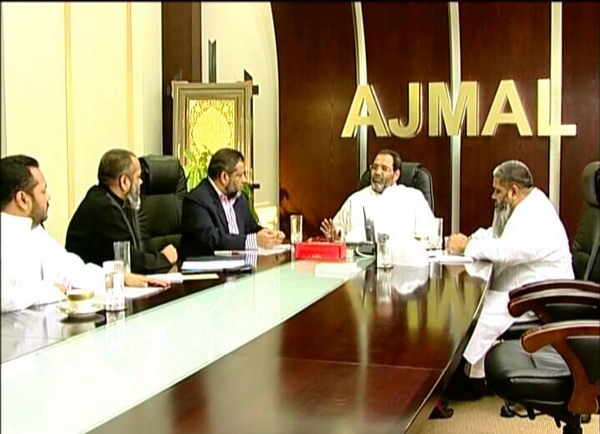
In the Middle East today, Ajmal Perfumes is synonymous with “the most excellent perfumery products” created in the region. Founded by the prolific entrepreneur Ajmal Ali, in 1951, who was from Hojai, Nagaon district of Assam, Ajmal Perfumes has today grown into a robust, multi-million dollar corporate. The brand stands out as a pioneer in the marketing of perfumes, fragrances and cosmetics to the Arab and western markets. It all begun when Ajmal Ali, a farmer came to Mumbai to try his luck as a trader in perfumes. The abundance of agarwood or oudh in his native Assam gave young Ajmal the idea that he could perhaps make a living out of trading in this natural resources, the prime ingredient of all oriental perfumes. With 500 rupees and some oudh oil as his starting capital, he left his hometown for Mumbai with high hopes.

In the tradition of great masters, Ajmal Ali worked in a dingy house in Bombay in the early 1950s blending perfumes and trying to find the right mixture that would impress the many Arab traders who visited India’s western shores and were fascinated by the country and its aromatic herbs. In 1964, he gives his family name to his product range. He shifted his operation base from Bombay to Dubai in 1976, where he opened the first Ajmal outlet and launches its first fragrance “Mukhallat”. The product was an instant hit and the success of the product prompts the company to launch more such products. Half a century later, his eldest son Amiruddin Ajmal today presides over the Dubai-based company which has an annual turnover of $170 million and is a regional corporate entity with a vast portfolio of over 100 of the finest and most captivating fragrances. Today, they have established a strong regional presence with over 200 showrooms across Gulf countries and hundreds of dealership across the world.UAE, Saudi Arabia, Oman, Kuwait, Qatar, Bahrain and India comprise the retail network. The global distribution network is spread across Pakistan, Russia, Iran, Syria, Maldives, Egypt, Turkey, Germany, Bulgaria, Sudan, Libya and Austria. The company has invested over $10 million in a new 150,000 square-foot facility in Dubai that offers a high-tech automated production unit including a state-of-the-art research wing. They are also the only regional perfume manufacturer authorized to issue quality certificates on behalf of the Saudi Arabian Standards Organization, or SASO. It has also been awarded the “Superbrand Status” following a strict selection process by the Kuwait Superbrands Council.

Nazir Ajmal, the youngest son is regarded as the nose of Ajmal. He plays a dual role as he is the Chief Operations Officer and the Chief Perfumer of the company. He says the company creates fragrances in both sprays and oils and that they fall broadly into two categories — oriental and French or Western. Oriental fragrances tend to be highly concentrated and are usually five times stronger than the Western ones. But, explains Ajmal, oriental perfumery is constricted by the use of a limited number of ingredients whereas perfumers can work with many more ingredients in Western perfumery and, as such, be more creative and produce a diverse range of products. The key ingredient of Ajmal’s products, of course, is oudh and this is not always readily available as it is found only in Southeast Asia and India’s Assam state. So they have their own plantation in Assam.

To remain in business, perfume manufacturers have to be constantly innovative. In the case of Ajmal Perfumes, its marketing teams do considerable research on consumer taste and behavior and report that to Nazir Ajmal. Based on the input, Nazir Ajmal then comes out with different blends. But ultimately, Nazir admits, it is the market that decides the fate of a particular brand. Ajmal takes great pride in the fact that every fragrance launched under its banner has been conceived, created, developed and manufactured in-house.

The best part is that the company has employed hundreds of people from its native state. They have twenty showrooms in Kuwait. I visited their showroom at Kuwait Magic Mall, where I met two employees from Assam, Ahmed Alauddin, the showroom manager and Imdad who were very helpful. I was surprised when they showed me the best quality agar wood which is from Assam sold at 825KD/ Kg i.e. Rs1, 32,000 per kg. I was happy to know that out of around 6000 employees in Ajmal Perfumes 70% are from Assam.

Today, Ajmal is a well-established business house with thousands of people working in factories and showrooms in India and abroad. The second generation of Ajmal’s has expanded their business strength into other businesses such as garments, leather goods, cosmetics and real-estate. But business has been just one part of Ajmal Ali’s life. The phenomenal rise to fame and prosperity did not make him forget his native village and did all he could for the poor and underprivileged. As part of its commitment towards promoting medical welfare, the HAMM Public Trust operates two medical establishments - the Haji Abdul Majid Memorial Charitable Dispensary and the Haji Abdul Majid Memorial Hospital. The dispensary provides free medical treatment, including medicines to approximately 300 needy patients daily. Other areas include child healthcare and basic healthcare education. The state-of-the-art Hospital and Research Centre is one of the largest charity and most modern rural hospitals in the country. It won’t be wrong to consider it as one of the most advanced rural hospitals in the South-East Asian region. The dispensary and hospital is in Hojai, the birth place of Ajmal Ali, which is one of the remotest parts of Assam. Ajmal Ali has ensured that over 80 percent of the hospital’s services should be provided free of cost to the poor who are in no condition to pay for their costly tests, diagnosis and super-specialty treatment. To boost the level of literacy in the country, the Markazul Ma'arif runs a group of schools under the name of Markaz Academy. Another centre of education is the Markazul Maarif Education and Research Centre (MMERC) which was established in Delhi and subsequently moved to Mumbai in 2000. The centre aims at providing basic education to the needy. The HAMM Public Trust even grants scholarships and subsidized assistance to deserving students, those who wish to pursue advanced medical studies. In order to alleviate the problem of unemployment in the country, both the HAMM Public Trust and the Markazul Ma'arif provide counseling and training to the unemployed youth. The Markazul Ma'arif manages the Markaz Darul Yatama Goalpara - an orphanage in Assam, which houses over 700 orphans and destitute children. The Trust provides them with the basic amenities like food, clothing and shelter, free of cost. Qualified teachers including trained physical instructors provide elementary education to the residents. The Maryam Ajmal Women’s College of Science and Technology in Hojai is one more example. It is a excellent proof of the Ajmal’s effort for social reconstruction through quality science education and also to show their deep love and gratitude to their mother, the late Maryamun Nisa Ajmal, wife of Ajmal Ali, whose memory they wish to immortalize by educating and empowering women.

Eminent Bollywood filmmaker Mahesh Bhatt made a documentary on Ajmal Ali and his social work, 'Torchbearer: The Story of a Philanthropist'. “I made this documentary to highlight one of the real heroes of this country. Unfortunately, the glamour industry is elbowing out the face of the truth. We have to distinguish between success and fame in a more realistic sense. The film stars may be famous, but it is people like Gandhi and Ajmal Ali who are the true heroes of the nation. The responsibility of this nation belongs to us. Either all of us make the nation, or all of us die together,” said Mahesh Bhatt in a short speech during the screening of the documentary.

Ajmal Ali died on February 17, 2009 and the family business is now managed by members of the Ajmal family spanning three generations. Late Ajmal Ali’s five sons have distributed the work among themselves. They are, in UAE, Amiruddin, CEO of Ajmal Perfumes; Fakhruddin, CEO Ajmal Real Estate; Nazir, COO, Ajmal Perfumes, and in India, the two other sons Badruddin(a politician and president of Assam United Democratic Front (AUDF )and Sirajuddin(politician and member of AUDF) look after the India operations as well as all the philanthropic work. The Ajmal’s have reached out to the suffering humans without noticing their creed, color or religion. They have truly followed their slogan 'Service to Humanity is a Service to God'.

(The article got published in Asian Tribune http://www.asiantribune.com/news/2010/10/17/ajmal-tradition-lingers and in AssamTimes.Org http://www.assamtimes.org/blog/4456.html)

Saturday, October 16, 2010

35th Book Fair,Q8

The 35th Kuwait International Book Fair started on Wednesday surrounded by controversy over the amount of censorship applied by the government on publishers. The Minister of Commerce and Industry, who attended the opening ceremony of the exhibition on behalf of HH the Prime Minister Sheikh Nasser Al-Muhammad Al-Sabah, stressed the importance of freedom in the state of Kuwait.

At the same time many publishers participating in the book fair expressed their disappointment at the level of censorship practiced in Kuwait.In Kuwait, freedom of expression and other forms of freedom are guaranteed according to the law for everyone, Kuwaitis and non-Kuwaitis,” said Ahmad Al-Haroon, the Minister of Commerce and Industry during a press conference after the book fair’s opening ceremony. The minister also pointed out the importance of using modern mediums of communication to deliver information. “We really hope people make use of the technological development of publishing and acquiring information but at the same time we know that nothing can replace the written book. “It will always occupy its current precious position,” Al-Haroon said.

Bader Al-Rifae, the head of Kuwait National Council for Culture, Arts, and Literature (KNCCAL) said that the era of open spaces leaves no more room to ban words, ideas or articles, not to mention books. “Nonetheless,” Al-Rifae said, “we need to realize that all of our lives are just a sum of collided forces and pressures. We can say that people’s collisions lead to some sort of balance and this is the kind of balance that we are now witnessing. The amount of freedoms that the minister pointed out, and the limits set on them, are also the result for social clashes,” he pointed. He added that the world is heading toward more freedoms and openness.

The annual occasion usually generates a wave of anger from publishers and activists in the country. In 2009 there were protests against what many called excessive censorship. The controversy over this year’s exhibition started long before the book fair itself, with many MPs and activists criticizing the ban of many books in the exhibition. Ministry of Information officials said that there were only 25 banned books this year. While some publishers said that none of their books were banned this year, others had different experiences.

From my list alone there were almost 15 books banned this year, and that only counts this year. I have more than 200 books that are banned only in Kuwait,” said one of the publishers who requested to remain anonymous. The publisher pointed out that books banned from previous years are automatically banned in addition to whatever new books are banned this year. “In Kuwait censorship is so severe that we do a self censorship before the Kuwait book fair,” the publisher continued. “We only submit a list of books that we believe might pass censors here and every time something new is banned.” According to him, Kuwaiti censorship is not only worse than all other Gulf Cooperative Council book fairs but also the worst censorship in the world. “I don’t think most of the censors read the books they ban.Another publisher who requested to remain anonymous said that he has been participating in Kuwait book fairs for more than 10 years now and that this year censorship became worse. “I would like to understand the criteria under which books are banned because sometimes it appears as if it is a random procedure,” he said. “In this book fair, a book of ours was banned, and I simply cannot see any reasonable justification for it to be banned at all! I just want to meet the person who banned it and ask him to tell me on what basis he made that decision. I bet he didn’t even read it.

Other GCC book fairs are far more open than here,” he said. “In Saudi Arabia they make an exception during book fairs and no books are censored. It’s the same in the United Arab Emirates as well. There, they ban books that even I, as a publisher, can understand. Here in Kuwait though it’s just over done.” More than 500 government and private publishers from 23 countries are participating in the country’s 35th book fair. The annual exhibition is taking place at the Mishref Fairgrounds from October 13 – 23

Kuwait Times

Sunday, October 10, 2010

Lulu Hypermarket celebrates 'Flavors of Arabia' festival

The atmosphere of the new Lulu Hypermarket in Al-Qurain Commercial City is infused with an appetizing aroma as Kuwait's largest hypermarket celebrates the 'Flavors of Arabia,' an enchantingly fragrant experience of Arabian spices. This festival will also be taking place at the Lulu Hypermarket in Al-Rai.

The 'Flavors of Arabia,' which runs from October 6 - 16, was inaugurated by Sheikh Duaij Al-Sabah from the Department of Europe at the Ministry of Foreign Affairs. "I am glad to host the launching of the best hypermarket in Kuwait," he told the Kuwait Times during the ceremony. "The name of this market is very dear to me because it is the same as my wife and daughter's name.

The ten-day spice extravaganza features special counters at the hot food, deli, bakery and rotisserie sections of the market and will highlight dishes from all over the region. In addition to tasting sessions, products from various Arab countries, including Egypt, Syria and Lebanon, will be on display at the festival.

Entertainment and cultural programs, including Egyptian and Syrian dances, will take place over the weekend. The festival will feature free henna and face-painting for children and the unique event is expected to draw an enthusiastic response from the Hypermarkets customers.

'Flavors of Arabia' is part of the retailer's initiative to continuously bring the best of the world to their customers by providing them the right products in the right place at the right time. The new Hypermarket, spread across 20,000 square meters of retail space, is a unique shopping experience. With its well-stocked shelves, wide aisles and check-out counters on each of the three floors, the Lulu Hypermarket provides customers with the largest collection of high-quality products at a very affordable price.In addition to displaying a wide range of international and regional brands, the Hypermarket provides a large parking space that can accommodate more than 3,000 vehicles. The brand, which has a distinct competitive advantage when it comes to understanding the retail needs of customers, leverages this unique knowledge and operates successfully throughout the region. The new Lulu Hypermarket draws customers not only from nearby residents but also from neighboring suburbs and lives up to the brand's tagline; 'Lulu, where the world comes to shop.'
The new Lulu Hypermarket in Qurain Commercial City was launched on July 27, 2010. In addition to the regular available services, some restaurants, retail stores and other shops will be opened within the next three months. In 2011 two more Lulu Hypermarket branches will be opened in the Jahra and Dajeej areas.
Kuwait Times

Enjyd exploring Fahaheel@ weekend

Fahaheel, is one of the main area of Kuwait.We have visited it many times and every time we enjoy it.Infact it has all, you just name it....lot of restaurants, Sea side,Centre point, Al Kout Mall, Al Manshar Mall, 5-star Rotana Hotel, Fahaheel Bazar, LuLu, Al Ghanim,Fish market, Vegetable market, many many shops selling cloths, accessories,gold shops, money exchanges etc. So all your needs are fulfilled. As we stay in Abu Halifa, this is the best place for us to shop, as it is only a 15-20 min drive from our place.But it changed after Mehr was born.The main problem here is parking your vehicle. You may have to park in a opposite direction though you have work in a different direction. To get a place to park your car is the main concern here. So to carry Mehr from one place to another is quite difficult when specially the weather is humid.
This weekend when we went to Fahaheel, Jeet told me that he will take me to a different area of Fahaheel. I was surprise as to which new area he will take me. We parked our car in the parking area of Al Manshar Mall. We walked towards the back side of Rotana Hotel and the Al Manshar mall. I was thinking where is he taking us, when I saw a security personal. Jeet talked to him and we went inside. I didn't know that it is  a residential complex. One of Jeet's friend stay here. The residential complex consist of 3 bedroom apartments, quite spacious and the view of the sea and Fahaheel from the apartment is just beyond description....all I can say is "wah". All at the price...guess......only 350KD.....we thought it would be 600-700KD. Though its in the heart of Kuwait, lot of market and hotel nearby, its far from the hue and cry. No noise, a perfect place to stay.The sea side, shopping area/markets are at stone's throw. We got tempted to shift but with a kid we don't need such a big place.The job of maintaining the big apartment will fall on me. So I at once cancelled the idea when Jeet suggested.
We just moved around Al Manshar Mall....I purchased few souvenirs.This mall has some nice souvenir shops, owners/shop-keepers are Kashmiri's( from India).It has lot of brand show-rooms, restaurants. A nice place to move around.
Background Rotana Hotel

@Al Manshar Mall

The pictures were taken earlier, 1 year back, when my dad visited us.

Weekends in Q8

Every weekend, when we don't have anything specific to do, we try to explore one area of Kuwait which we have never visited before.
This weekend we decided to explore Rawda. This area is next to Hawally.A Kuwaiti area with lot of nice villa's.But the characteristic of the area is that it has lot of greenery.Each and every house, whatever space they have has lot of trees and plants.

Jeet had some work in the Egyptian Embassy and so we planned to do the work and also explore the area. This is not the main embassy building. Egyptian Embassy has two offices here.In this one, visa work etc are done. We had to move for sometime as the Embassy building which is a villa is not nicely marked and also towards the end of the road.The address is
Consulate General for the Arab
Republic of Egypt
Block5, Street 58 Villa1,Rawda
Kuwait, Post Box:33200
Rawda-73452

Sunday, October 03, 2010

Google map Green Island Q8

A reader of my blog, who is new to Kuwait, asked for the address of Green Island. Its not difficult to find out this famous picnic spot of Kuwait. Its near Kuwait Tower's. Here's the google map, hope it will be of help

View Larger Map